
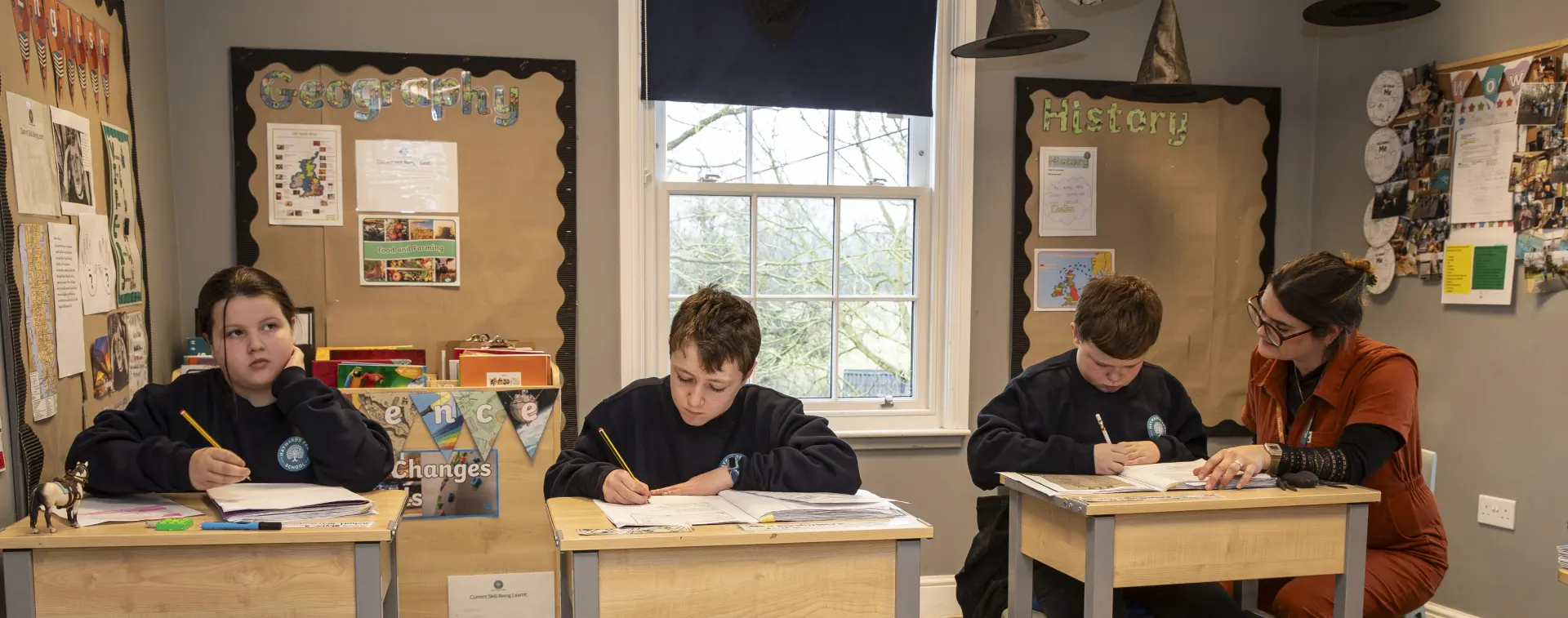
Humanities

Intent
At Northcroft School, History is designed to nurture curiosity, critical thinking, and empathy — enabling all learners to understand how people’s actions, beliefs, and experiences have shaped Britain and the wider world. Our intent is to provide depth over breadth, focusing on powerful core narratives that support SEN learners to make meaningful connections between past and present.
The History curriculum encourages students to see themselves as part of Britain’s story, developing a sense of identity, belonging, and shared values. Through carefully chosen units such as Empire and Migration, Elizabethan Leadership, and Conflict and Change in the 20th Century, pupils explore themes of power, diversity, conflict, and community that run throughout our wider curriculum intent.
Lessons are sequenced to build confidence in historical enquiry, chronological understanding, and cause and consequence, while also promoting literacy through historical storytelling ensuring that English and History reinforce one another. This cross-curricular approach supports the development of communication skills, reading comprehension and writing for purpose.
The curriculum is therapeutic and accessible, structured around B² progressions and EHCP outcomes, ensuring all pupils experience success. It fosters British Values, SMSC, and respect for difference, helping students reflect on moral questions and the complexity of human choices.
Students are provided with clear and ambitious pathways that prepare them for formal accreditation. They will have the opportunity to work towards a History AQA GCSE or Entry Level Certificate (ELC), depending on their stage of learning. For those joining the school later in their academic journey, there is an ASDAN History and Humanities exposure route, ensuring every learner experiences historical understanding and success at their level.

Implementation
History is taught through the Oak Academy 2025–2026 sequence, adapted to meet the needs of SEN learners through depth-focused teaching. Each unit is carefully reduced to its essential knowledge and key questions, allowing time for overlearning, discussion, and reflection.
Teachers Adapt Oak Materials By:

Breaking complex concepts into smaller, scaffolded steps with adapted learning.
Embedding visual supports, timelines, and story maps to secure understanding.
Using dual coding, sensory-based activities and oracy-led approaches.
Incorporating oral storytelling, structured debate, and comprehension tasks to strengthen literacy and oracy.
Linking lessons directly to B² assessment steps for precise tracking and intervention.
Learning Takes Place Both In The Classroom And Through Enrichment Experiences:
Forest School supports teamwork and leadership through historical simulation, for example, Tudor decision-making or building “Roman camps.”
Stable Futures develops collaboration and resilience for students who find classroom learning challenging, enabling them to demonstrate leadership, problem-solving and historical empathy through outdoor hands-on experiences.
Visits and immersive days (e.g. Donnington Castle, Ufton Court, and local heritage sites) connect learning to lived experience and deepen contextual understanding.
All units explicitly link to PSHE, British Values, and SMSC themes such as fairness, democracy, identity, and respect. Reflection activities encourage students to draw parallels between the past and their own experiences, supporting moral and social development.
Staff use Rosenshine’s Principles of Instruction to reinforce knowledge through retrieval practice, modelling, and scaffolding, ensuring consistency and retention for SEN learners.

Impact
The impact of History at Northcroft School is seen in students who can:

Recall key events and individuals with increasing independence.
Use historical vocabulary with confidence and accuracy.
Explain cause and consequence, recognising how actions shape communities and change societies.
Make connections between historical and contemporary issues, supporting their development as thoughtful, informed citizens.
Progress is tracked through B² steps, teacher observation, and practical assessment opportunities both in classroom and outdoor contexts.
Success is measured not only through written outcomes but also through dialogue, reflection, and participation — ensuring every learner experiences achievement.
Students progress onto AQA GCSE History or Entry Level Certificate (ELC) pathways where appropriate, with accreditation reflecting their depth of understanding and engagement. For those who join later or require alternative provision, the ASDAN History and Humanities programme provides recognition of historical enquiry, teamwork and communication skills.
Through History, students gain a stronger sense of self and society, preparing them for life beyond Juniper House School with the ability to think critically, empathise and make informed decisions.
The History curriculum at Northcroft School is ambitious, inclusive, and deliberately adapted to meet the diverse needs of our learners, many of whom have Education, Health and Care Plans (EHCPs) or identified SEND and SEMH needs. We recognise that access to deep, meaningful learning requires more than content coverage; it requires careful sequencing, explicit teaching of disciplinary skills, and therapeutic approaches that help students feel safe and valued as learners.
Curriculum Structure and Progression
The curriculum is sequenced to build chronological understanding, historical literacy, and moral reasoning through a coherent thread from Key Stage 3 to Key Stage 4.
Each stage revisits and builds upon key disciplinary concepts: power, belief, identity, change, and evidence ensuring knowledge and skills are cumulative and coherent.
Intended Outcomes
By The End Of Key Stage 4, Students Will:

Possess a secure chronological framework and awareness of how past events connect to modern life.
Use evidence critically to form balanced arguments and informed opinions.
Demonstrate empathy, curiosity, and confidence when exploring new ideas.
Recognise their place in history as citizens who can contribute positively to their communities.
Ultimately, our history curriculum equips students not just for examination success, but to become thoughtful, reflective and responsible young adults who understand the importance of both heritage and humanity.
