
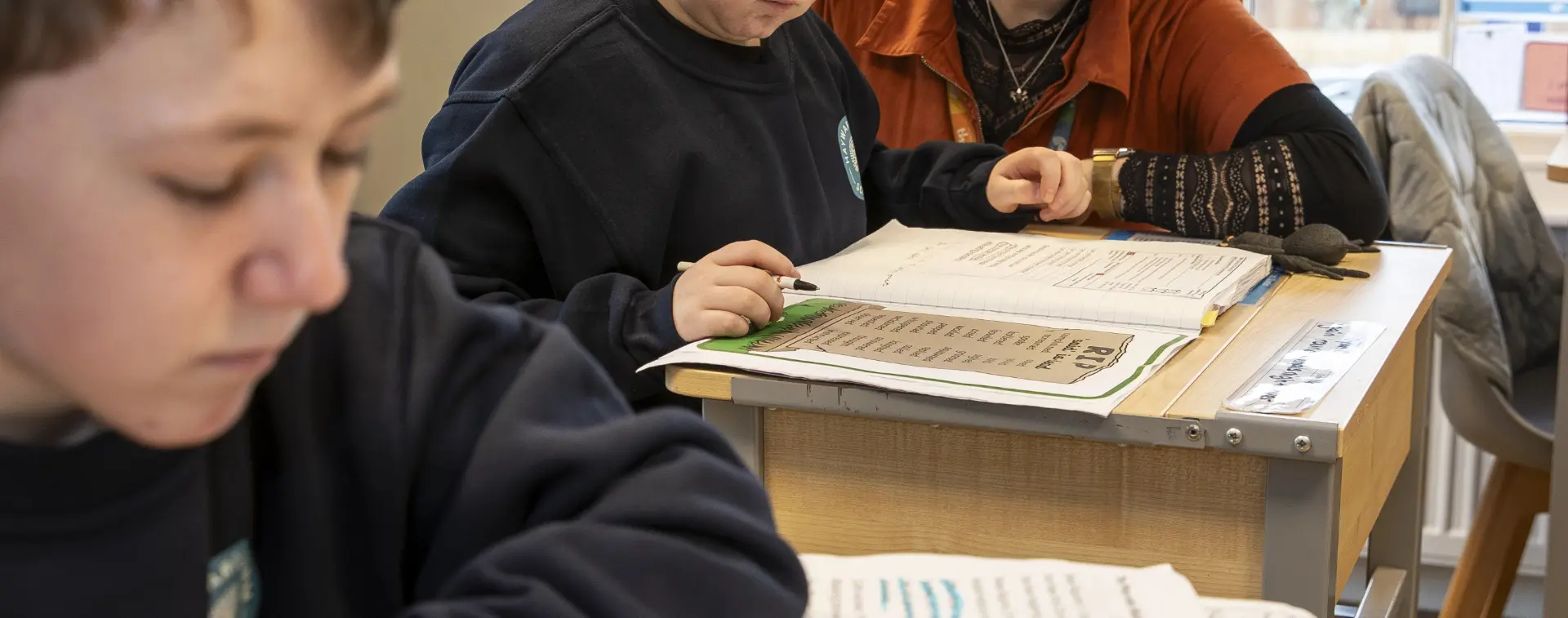
Phonics and Reading
Determined That All Children Become Fluent Readers
At Northcroft School, we are determined that all children become successful, fluent readers so that they are able to access real life reading experiences and prepare them for adult life, which forms part of our reading curriculum intent.
At Northcroft School, our dedicated Literacy Intervention Lead provides targeted support for pupils who experience challenges with literacy, including dyslexia and related learning differences. Our structured 1:1 lessons use evidence-based approaches designed to develop phonics understanding, reading accuracy and fluency, spelling proficiency and overall confidence with written language.
Interventions also focus on strengthening essential underlying skills such as alphabetic knowledge, auditory memory and phonological awareness. By tailoring support to each pupil’s individual learning profile, Northcroft School helps learners build the strong foundations they need to become more independent, resilient and successful in their studies.

Foundations For Literacy
A successful whole-school literacy strategy includes activities that support our children with SEN in developing reading, spelling, fluency and comprehension.
All pupils need the same knowledge of the alphabetic code to become independent readers and spellers. Extensive research shows how important teaching systematic synthetic phonics (SSP) is until children can decode automatically.
This is true for all pupils who are learning to read including those with SEND. Broadly speaking, it will only be those pupils with severe cognitive difficulties that cannot be taught the alphabetic code.
The curriculum remains the same but the pedagogy, which reflects the way in which it’s taught, will differ depending on the needs of the child.
Some pupils with SEND will probably need a lot more practice to secure important phonic knowledge. This does not mean phonics is not working. It just means we need to think really carefully about how best to help pupils secure this knowledge – what pedagogy we are using.
For example, at Northcroft School, students learn to read on an individual basis, free from distractions and at times will benefit from teachers breaking the learning down into smaller steps and repeating the steps to increase overlearning.
Within our school we have additional schemes to support older students who still need to have access to a phonic scheme.
At Northcroft School, we have a designated intervention teacher who is specialised in delivering Jolly phonics. All staff within the school have all had training to ensure that they can offer the consistency of high quality teaching within the classroom.
Multi-Sensory Approach
Jolly Phonics is a fun and child-centred approach to teaching literacy through synthetic phonics. With actions for each of the 42 letter sounds, the multi-sensory method is very motivating for children and teachers. The letter sounds are split into seven groups as shown below.
Modelling Reading Behaviour
Another effective strategy used is to model reading behaviour. Simply demonstrating and encouraging children to move a finger from left to right on a page can help them keep track of text, particularly if they have visual or processing difficulties.
Contact us today. We welcome all enquiries and are happy to share information about our school.
For general enquiries, please contact the main office. A member of our reception team will help and put you in touch with the right person.
